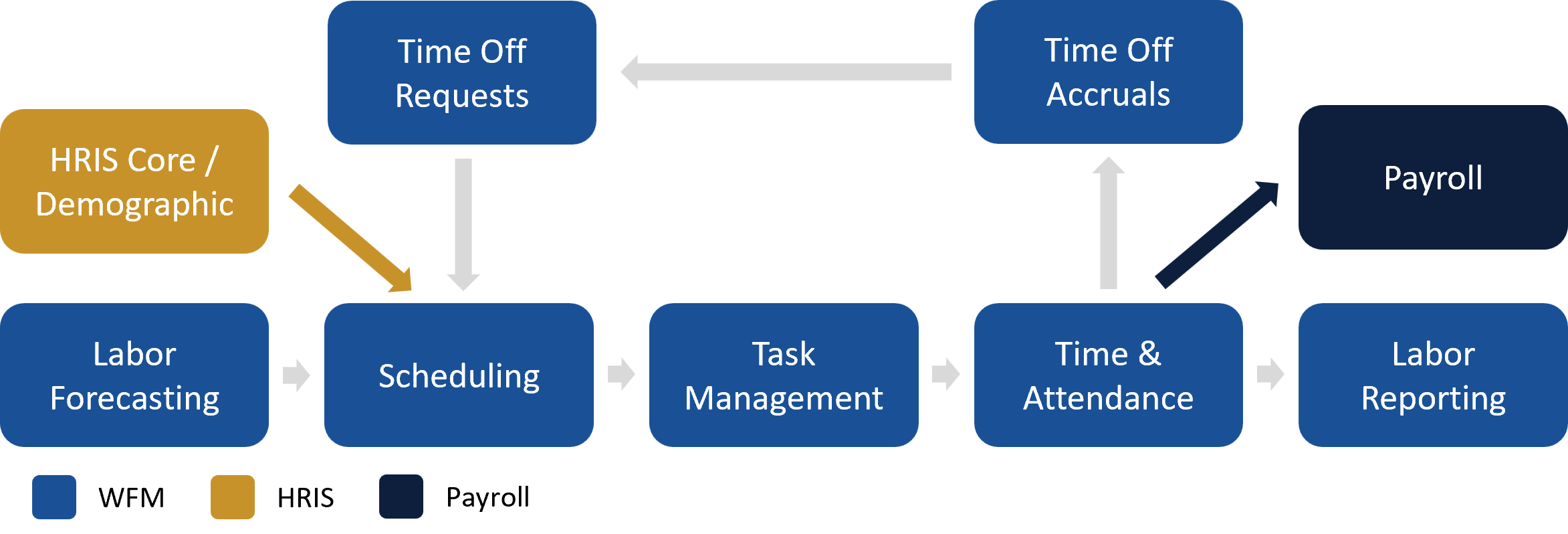
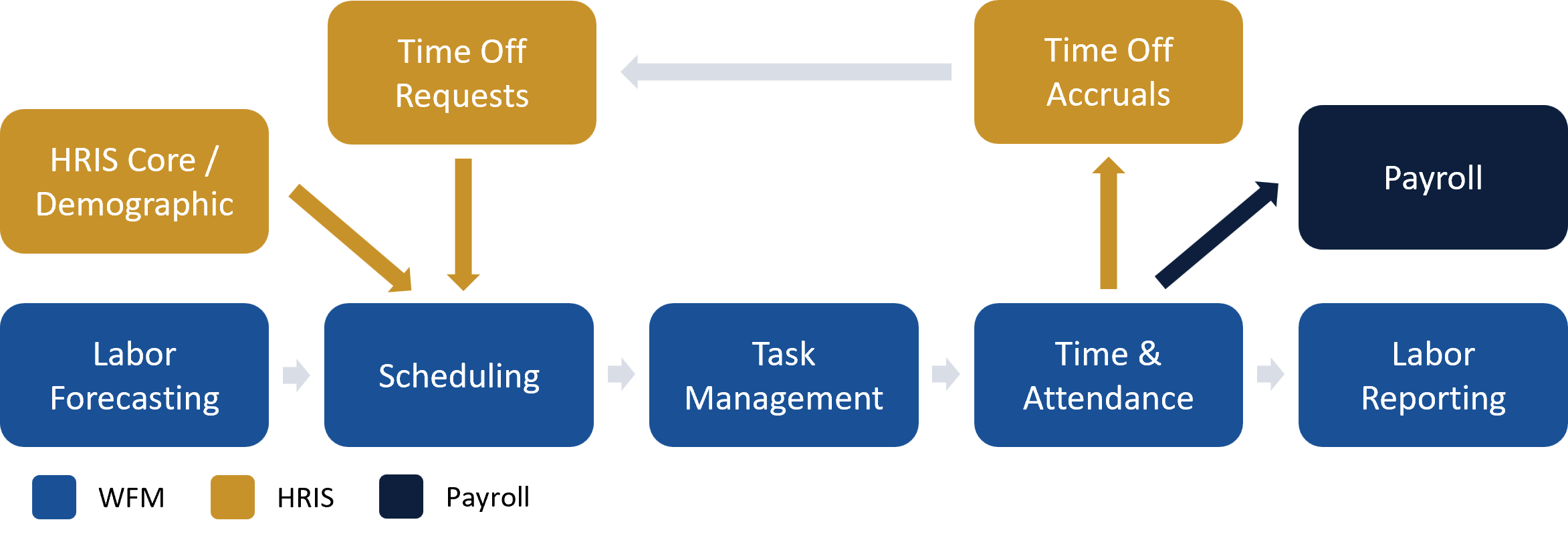
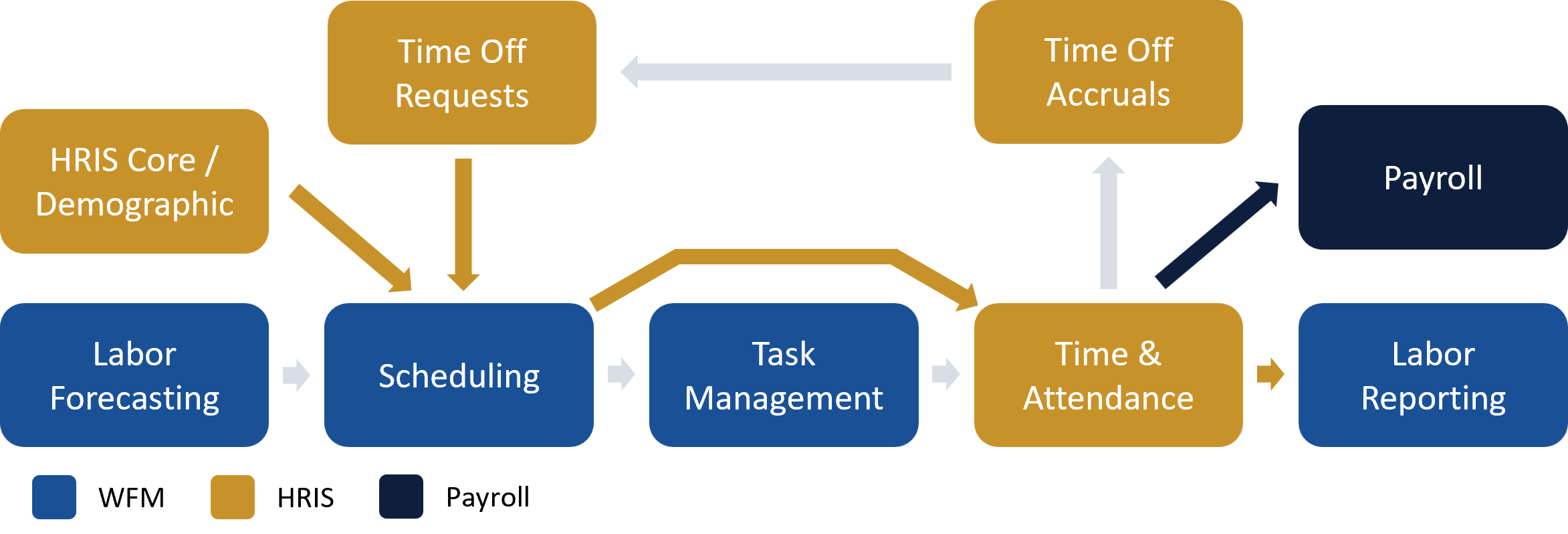
When HR platforms started bundling scheduling tools, it seemed like a reasonable deal. One vendor, one system, less integration overhead. But for operations leaders running complex, demand-driven workforces, that convenience comes with real costs. The worst part is that most of these only become visible after the system is live and the gaps start showing. Here are five reasons to think carefully before relying on a generic, HRIS-bundled Workforce Management (WFM) solution.
01Compliance and efficiency are not the same goal
HRIS systems are built around HR's primary concern: is this schedule legal? Does it meet policy? Those are important questions, but they are not the same questions Operations leaders need to answer. You need a system that doesn't just flag a bad schedule after the fact. It should guide you toward building a better one, and ideally let you model multiple scenarios before you commit. An HRIS records decisions made elsewhere. A proper WFM system helps you make better decisions in the first place. It will show you coverage gaps across the day, evaluate how well your schedule performs against demand, and will track how effectively employee preferences are being met.
02Your HRIS can take in demand forecasts. It can't build an operating plan.
Most bundled tools translate a business forecast directly into labor requirements, skipping the entire layer of operational planning in between. That means no task-level sequencing, no visibility into who does what and when. In hospitality, knowing rooms occupied gives you a labor number but not a housekeeping board. That's the day-of operational plan: which rooms get cleaned, in what order, and by whom. That planning happens on paper or in a spreadsheet, and you spend real time keeping everything in sync.
03Vacation approval is more than a balance check
When an employee requests time off, there are two questions to answer: do they have sufficient balance, and can the operation run without them during that period? Generic systems handle the first question reliably. The second requires longer-horizon capacity planning and the ability to assess, well in advance of schedule-building, whether a given week can absorb planned absences. Without it, approvals are made on intuition, leaving you high and dry when it comes time to build the schedule.
04Keeping Time & Attendance (T&A) in the HRIS creates a hidden reconciliation cost
T&A feels like a natural fit for an HRIS. It is transactional, it maps to payroll, it belongs in the system of record. But your WFM system needs actuals at a finer level of granularity than the HRIS typically captures, so that labor standards can be continuously refined against real performance. The practical outcome is two systems recording actuals at different levels of detail, and someone, usually an analyst, reconciling them on a recurring basis.
05Industry-agnostic means optimized for no one
A WFM system built to serve retail, healthcare, logistics, and hospitality from a single codebase has to make compromises everywhere. The configuration options required to handle that range of industries don't disappear. They accumulate in the interface as complexity that your operation has to navigate, even when most of it is irrelevant to you. Simple tasks get buried. Common workflows require extra steps. You pay the complexity cost of problems that aren't yours.
None of this means HRIS-bundled scheduling tools have no place. For organizations with simple, predictable workforce needs, they may be entirely sufficient. But for operations that are demand-driven, task-intensive, or seasonally complex, the gap between what a generic tool offers and what the business actually needs tends to grow over time. It tends to show up in labor cost, operational quality, and analyst hours spent working around the system.
We've seen the full spectrum of WFM solutions and know what works and what doesn't. Reach out to us to get clarity on your WFM platform needs.